Commercial & Special Purpose Vessels

Beyond Yachts

The same shipyard that builds private yachts builds the vessels that work for a living — passenger craft, workboats, fishing vessels, and special purpose units engineered for operators who measure value in uptime, not upholstery.

The Commercial Difference

Built To A Different Brief

A commercial vessel is judged by a harder standard than a private yacht. It has to leave the berth on schedule every day of the season, absorb heavy use from crews who are working rather than relaxing, and come back for maintenance without taking a revenue week out of the operator's year. That changes almost every decision we make: material thickness, deck surfaces, access panels, equipment placement, and how easily a worn component can be reached and replaced at three in the morning.

We build these vessels in the same yard, to the same structural discipline, as our yachts — but with the finishing priorities inverted. Durability comes first, ease of maintenance second, and everything cosmetic is chosen for how well it survives a decade of commercial service. Operators along the Red Sea and the Gulf of Suez don't need a vessel that photographs well on delivery day; they need one that's still earning in year eight.

12 mo Typical Build Cycle
40,000 m² Shipyard Capacity
Class-Certified Structural Standard
Full In-House Design To Sea Trial
What We Build

Twelve Vessel Types, Three Families

Every unit is engineered for the work it will actually do — and built to the same structural discipline as our yachts.

Passenger & Tourism

Vessels that carry people — where safety certification, passenger flow, and turnaround time decide whether the operation works.

Large passenger vessel carrying many passengers, seen from above

Passenger Vessels

Certified passenger craft for ferry routes, shuttle services, and scheduled transfers. Layouts are built around boarding at busy jetties, clear escape routes, shaded and enclosed seating, and the kind of deck flow that lets a full load disembark quickly without crowding a single doorway. Every unit is engineered to the passenger-safety requirements of the route it will actually run.

60–200Passenger Capacity
20–45 mLength Range
Class-certifiedSafety Standard
Discuss this vessel type
Tourism vessels docked along a busy waterfront marina

Tourism Vessels

Day-charter and excursion craft for resorts, tour operators, and Red Sea fleets. The economics here depend on comfort at anchor as much as on speed between stops: shaded deck space, swim platforms, service points, and interiors that clean down fast between two runs in the same day.

40–120Guest Capacity
18–35 mLength Range
2 runs/dayDesigned Turnaround
Discuss this vessel type
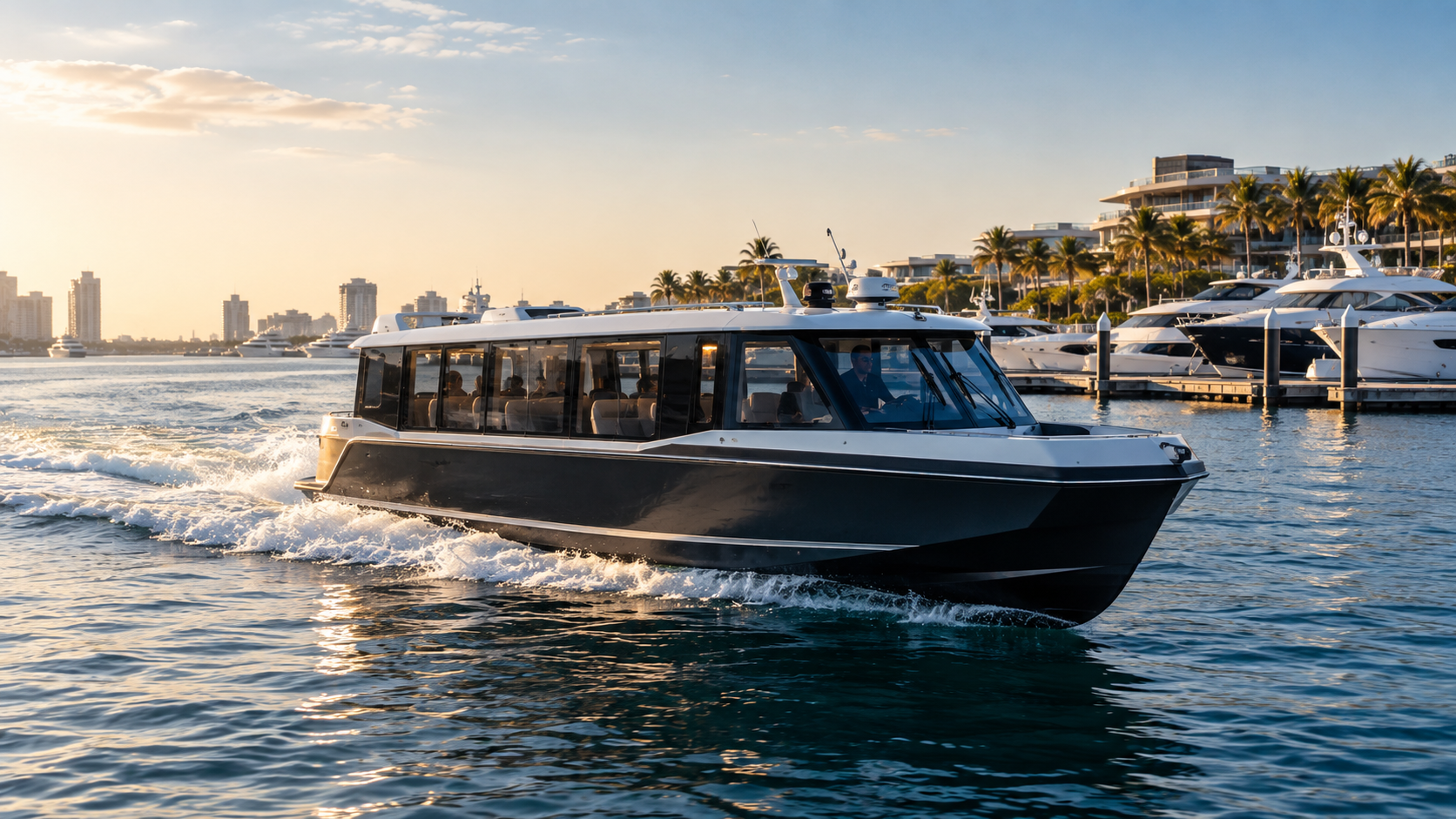
An enclosed passenger water taxi cruising through a marina past moored yachts at golden hour

Water Taxis

Fast, compact craft for short hops between marinas, resorts, and offshore points. Built for frequent starts and stops, easy single-crew handling, and a hull that stays comfortable in the short chop of a busy harbour rather than punishing passengers on every transit.

8–15 mLength Range
10–24Passenger Capacity
25+ knService Speed
Discuss this vessel type
Cockpit and deck seating of a purpose-built diving vessel

Diving Boats

Purpose-built dive platforms for Red Sea operations — compressor rooms, tank racks and filling stations, wide entry and exit platforms, and deck circulation designed around groups kitting up and moving into the water all day. Built by a yard that sits on the Gulf of Suez, for the conditions these boats actually work in.

16–26Divers Aboard
2Dive Platforms
OnboardCompressor & Filling
Discuss this vessel type

Commercial & Utility

Working vessels, where the only metric that matters is how many days a year the unit is available.

Commercial port at night with cranes and working vessels alongside

Commercial Boats

General-purpose commercial craft built to carry cargo, equipment, or personnel on routine routes. Reinforced decks, generous load capacity, and a systems layout designed so routine servicing doesn't require pulling the vessel apart.

15–35 mLength Range
ReinforcedDeck Loading
Discuss this vessel type
Working barge on inland water with deck equipment in place

Workboats

Built for construction, dredging support, mooring work, and general marine operations. Heavy fendering, deck equipment mounting points, and structural margins that account for a vessel spending its life alongside other steel.

12–30 mLength Range
Heavy-dutyFendering & Bitts
Discuss this vessel type
Service vessel docked at an industrial shipyard beside cranes

Crew Boats

Fast personnel transfer craft for offshore and port operations. Seating engineered for a comfortable ride in real sea states, secure boarding arrangements, and the speed to keep a shift-change schedule intact.

18–35 mLength Range
30–70Crew Capacity
28+ knTransit Speed
Discuss this vessel type
Two working vessels moored side by side during net operations

Service Boats

Support craft for maintenance, inspection, and supply runs to moored vessels and offshore installations. Configured around whatever the operator actually carries — tools, spares, fuel, or fresh water — rather than a generic layout.

10–25 mLength Range
ConfigurableDeck & Tankage
Discuss this vessel type
Aerial view of a small utility craft on open water

Utility Boats

Multi-role craft for operators who need one hull to do several jobs across a season. Modular deck fittings, flexible seating and stowage, and a build that tolerates being reconfigured rather than treated gently.

8–20 mLength Range
Multi-roleDeck Configuration
Discuss this vessel type
Aerial view of a working fishing trawler with nets deployed at sea

Fishing Vessels

Commercial fishing craft built around the gear and the catch: deck space for nets and handling, insulated hold capacity, and range that matches the grounds the operator actually works. Structural margins account for heavy deck loads and constant exposure.

14–30 mLength Range
InsulatedHold Capacity
Gear-specificDeck Layout
Discuss this vessel type

Special Purpose

When the requirement doesn't fit a category, the vessel is designed around the requirement.

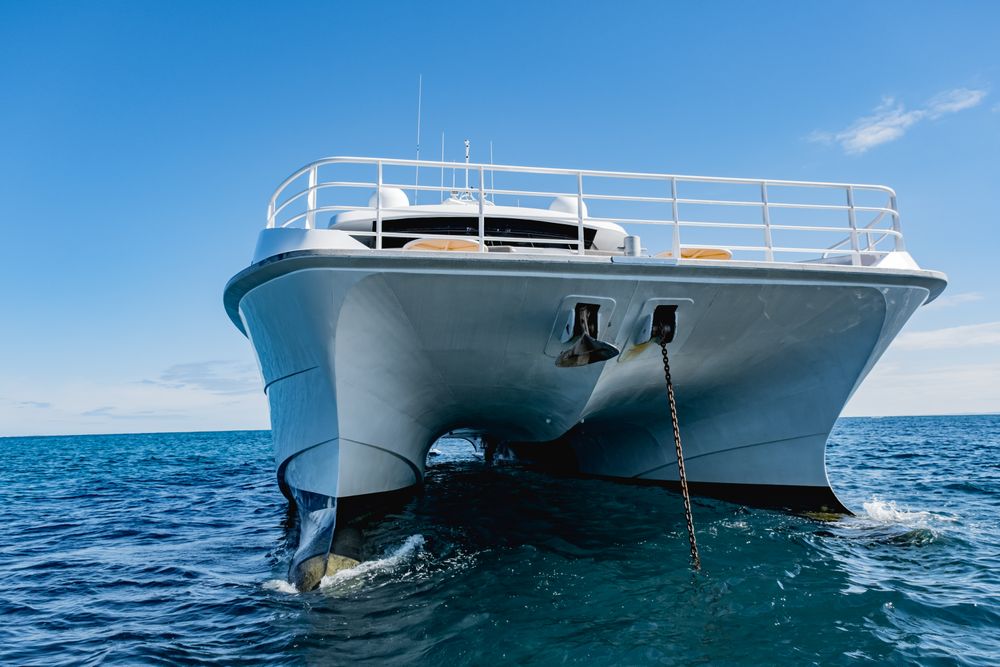
Large purpose-built vessel moored on calm open water

Special Purpose Vessels

Survey craft, patrol boats, training vessels, rescue units, and any requirement that starts with a specification rather than a category. Our naval architects take the operational brief — endurance, equipment, crew, sea state — and build the hull around it. These are the projects where in-house design matters most, because there's no existing platform to adapt.

Brief-definedLength & Layout
Mission-builtSystems Package
Discuss this vessel type
Low-angle view of a fast launch underway on open water

Launches

Fast, compact craft for pilot transfers, harbour duties, patrol runs, and tender service to larger vessels. Built for quick response and frequent daily use, with hull forms that hold their line at speed in confined harbour water.

6–14 mLength Range
30+ knTop Speed
Daily-useBuild Standard
Discuss this vessel type
Shipyard Capability

One Yard, Every Stage

Vessels under construction at an industrial shipyard with cranes overhead Welder working on structural steel inside the shipyard workshop

Nothing on a commercial order is farmed out to a subcontractor whose schedule we don't control. Hull fabrication, structural welding, systems installation, and fit-out all happen inside our own facility on the Gulf of Suez, which is the only reason we can give an operator a delivery date and stand behind it. When a build slips at a yard that outsources half its work, nobody can say exactly where the delay came from. Here, the naval architects who drew the general arrangement can walk out to the shop floor and look at the plate.

In-House Fabrication

Hull and structural work built and inspected under our own roof.

In-House Naval Architecture

Design and structural calculation done by the same team that oversees the build.

Class Compliance

Structural and systems work inspected against international marine classification requirements.

Schedule Accountability

Delivery dates set by the people who actually control the yard's capacity.

Shipyard technician inspecting work on a vessel under construction
Operating Life & Support

A Vessel That Earns Needs A Yard That Answers

For a commercial operator, a breakdown isn't an inconvenience — it's lost revenue with a date attached. That's why our refit and maintenance division treats commercial clients differently from private owners: scheduled servicing planned around the operating season rather than against it, emergency work prioritised by how much the downtime actually costs, and a parts and drawings record kept for every vessel we deliver so nothing has to be reverse-engineered years later. We also take on refits and conversions of vessels we didn't build, because a hull that's structurally sound is often worth far more rebuilt than replaced.

  • Season-Aware Scheduling
  • Priority Emergency Response
  • Full Refit & Conversion
Explore Refit & Maintenance
How We Build

From Operational Brief To Handover

1

Operational Brief

We start with the route, the load, and the season — not with a hull number.

2

Design & Class Approval

Naval architecture and structural calculation, submitted for classification review.

3

Construction

Fabrication, systems and fit-out inside our own shipyard.

4

Inspection & Certification

Structural, systems and safety inspection against class requirements.

5

Sea Trial & Handover

Performance validated on the water, delivered with full documentation.

See the engineering behind every build

Working commercial harbour illuminated at night

Tell Us What The Vessel Has To Do

Give us the route, the load, and the season — we'll tell you what it takes to build for it.

Request a Commercial Vessel Quote